
When Do You Need a Retaining Wall?
A retaining wall holds back soil and manages elevation changes on your property. Without one, slopes erode, patios shift, and drainage problems worsen over time. In Sussex County, where sandy soils and seasonal water table fluctuations are common, proper retaining wall construction with integrated drainage is essential for long-term stability.
You may need a retaining wall if your property has a noticeable slope between areas, if water is pooling against your foundation, if an existing wall is leaning or cracking, or if you want to create level terraces for a patio, pool deck, or planting beds. We assess your site conditions during a free estimate and recommend the right wall type and construction method for your situation.
At Just Imagine Hardscapes & Pools, we build retaining walls in-house using the same crew that handles our pool installations and patio builds. That means your wall integrates properly with surrounding hardscape elements rather than being built in isolation by a separate contractor.
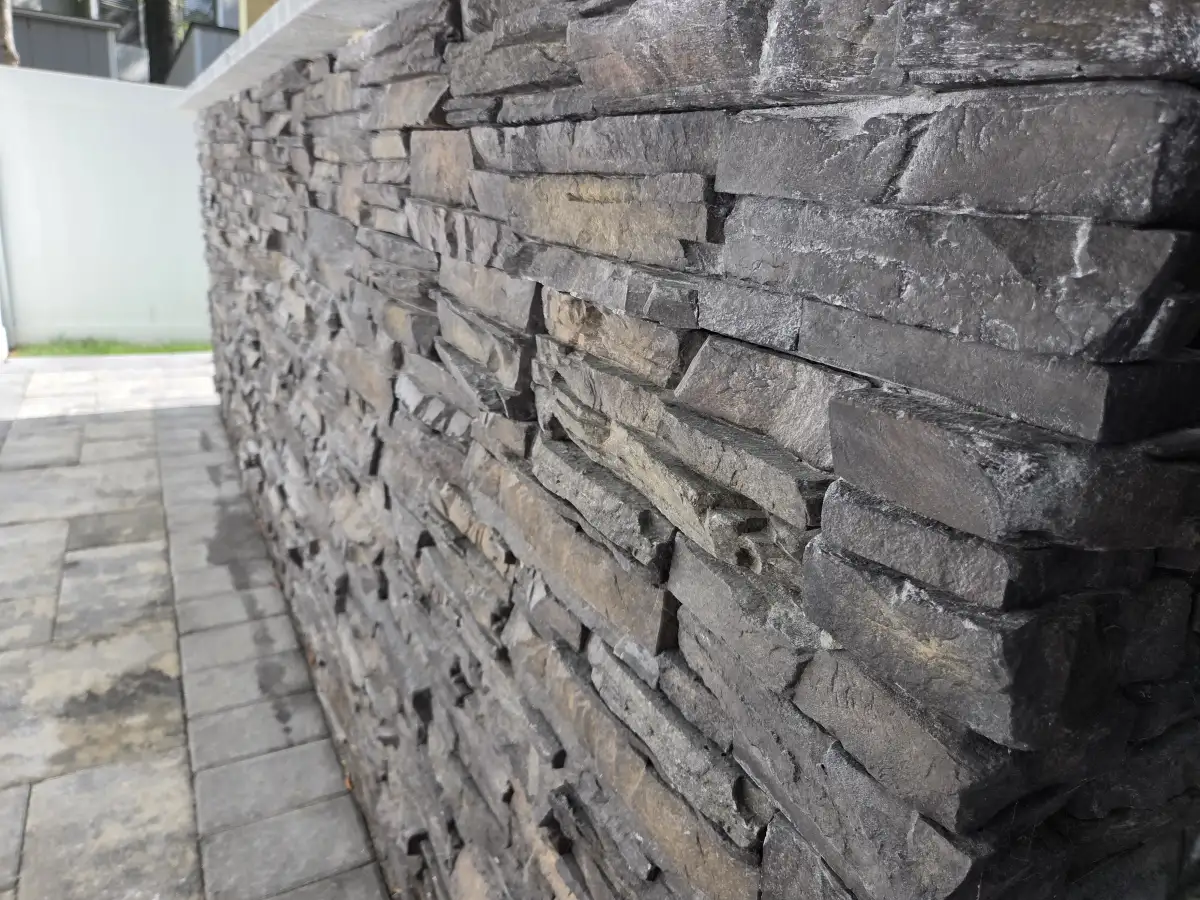
Types of Retaining Walls We Build
We build structural walls that hold back earth, decorative walls that define spaces, and seating walls that add function to your outdoor living area.
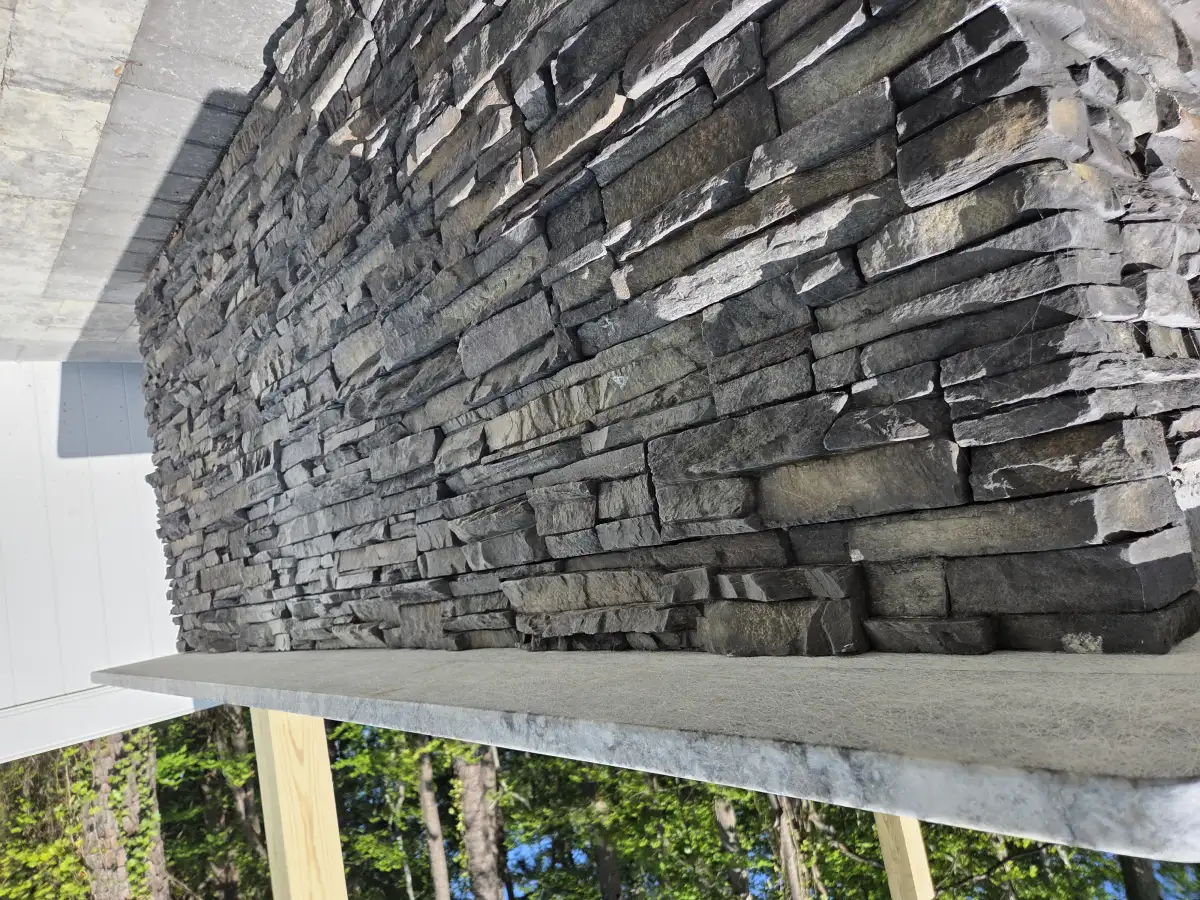
Structural Retaining Walls
Engineered to hold back soil and manage significant elevation changes. Built with interlocking block, geogrid reinforcement, and proper drainage systems. Structural walls are designed to bear load and prevent soil movement over decades of use.
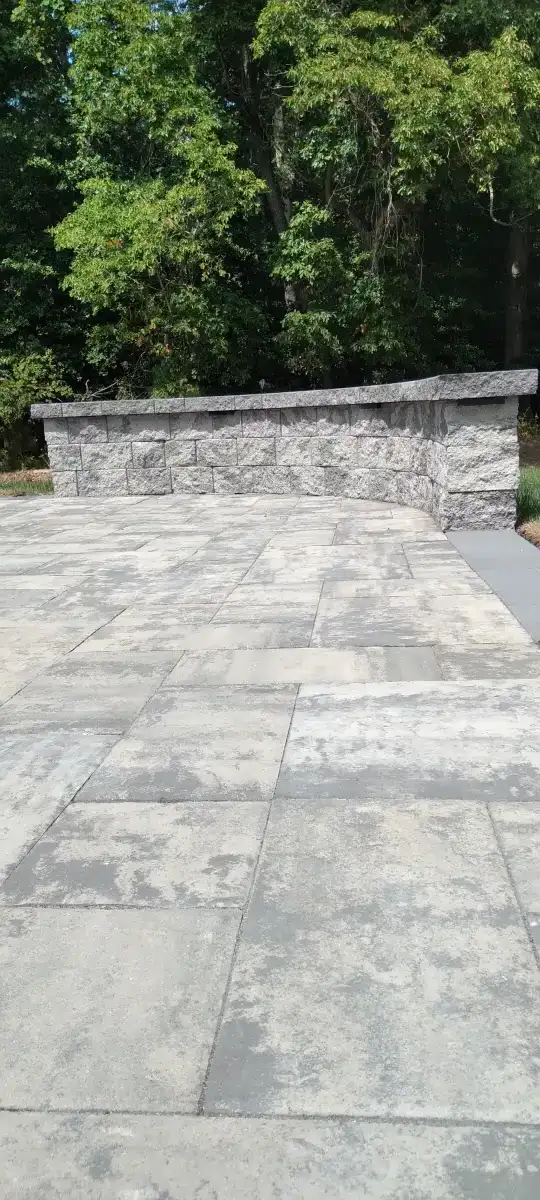
Decorative & Garden Walls
Shorter walls used to define planting beds, border walkways, and create tiered garden spaces. Decorative walls typically stand 1 to 3 feet tall and use natural stone, tumbled block, or brick for a finished appearance that complements your landscape.
Seating Walls
Freestanding or connected walls built at sitting height (18 to 22 inches) around fire pits, patios, and pool decks. Seating walls provide built-in seating that eliminates the need for outdoor furniture in conversation areas. We cap them with smooth stone or concrete for comfort.
Retaining Wall Materials
The right material depends on the wall's purpose, height, aesthetic, and budget. We work with all major retaining wall materials and help you choose the best option during your consultation.
- Interlocking concrete block: The most common choice for structural walls. Available in multiple colors and textures. Engineered locking systems resist lateral pressure without mortar.
- Natural stone: Fieldstone, bluestone, and limestone create a high-end, organic look. Ideal for decorative and garden walls. Heavier and more labor-intensive to install but visually distinctive.
- Manufactured stone veneer: A lighter-weight option that mimics natural stone at a lower cost. Applied over a structural block core for walls that need both strength and appearance.
- Timber and landscape ties: Cost-effective for shorter, non-structural applications. Pressure-treated timber works well for garden borders and minor grade changes. Not recommended for walls over 3 feet.
- Poured concrete: Used for tall structural walls or when the wall serves as a foundation element. Finished with stucco, stone veneer, or exposed aggregate depending on the design.
Drainage Integration
Water is the primary reason retaining walls fail. Hydrostatic pressure builds behind walls that lack proper drainage, causing them to lean, crack, and eventually collapse. In Sussex County, where the water table is high and sandy soils allow rapid water movement, drainage is not optional.
Every structural retaining wall we build includes a perforated drain pipe at the base, clean crushed stone backfill behind the wall, and filter fabric to prevent soil migration into the drainage aggregate. For walls on properties with known water table issues, we may add additional drainage outlets or connect to a larger yard drainage system.
- Perforated drain pipe at wall base with proper slope to outlet
- Clean crushed stone backfill (not native soil) behind the wall
- Non-woven geotextile filter fabric to prevent soil clogging
- Weep holes at regular intervals for additional pressure relief
- Connection to existing or new yard drainage systems when needed
How Much Does a Retaining Wall Cost in Delaware?
Retaining wall costs depend on the wall type, material, height, length, and site conditions. Here are typical ranges for Sussex County projects:
- Small decorative or garden wall (under 2 feet): $25 to $40 per square face foot. A 20-foot-long garden border wall typically costs $1,500 to $3,000.
- Standard block retaining wall (2-4 feet): $35 to $60 per square face foot. Includes drainage, compacted base, and geogrid reinforcement where required.
- Tall structural wall (4+ feet): $50 to $80+ per square face foot. Engineering requirements, deeper foundations, and more extensive drainage increase the investment.
- Natural stone walls: Add 20-40% over block walls for material and labor due to the irregular shapes and heavier weight.
- Seating walls: $50 to $100 per linear foot including cap stone, depending on material and height.
These ranges give you a general idea, but every property is different. Soil conditions, access, existing structures, and drainage requirements all affect the final number. Schedule a free estimate for an accurate quote.
Retaining Wall Projects
Recent retaining wall installations across Sussex County, Delaware.
Retaining Wall FAQ
In Sussex County, retaining walls over 4 feet in height (measured from the bottom of the footing to the top of the wall) typically require a building permit and may need engineered drawings. Walls under 4 feet generally do not require a permit but must still meet setback requirements. We handle the permit process for you when required.
A properly built retaining wall with correct drainage should last 50 years or more. Interlocking concrete block and natural stone are the most durable options. Timber walls have a shorter lifespan of 15 to 25 years depending on exposure and wood treatment. The most common reason walls fail prematurely is inadequate drainage, which is why we build drainage into every structural wall.
Yes. We regularly demolish and replace failing retaining walls. Common signs of failure include leaning, cracking, bulging, or gaps between blocks. We remove the old wall, correct the underlying drainage and base issues that caused the failure, and build a new wall designed to last. The replacement wall includes proper drainage that the original likely lacked.
Interlocking concrete block is the best overall choice for Sussex County's sandy soils. It provides consistent structural performance, drains well with proper backfill, and the interlocking design resists lateral movement without relying on mortar bonds that can crack. For purely decorative applications, natural stone also works well because sandy soil actually improves drainage behind the wall.
Absolutely. We frequently design retaining walls at seating height (18 to 22 inches) around fire pits and patio areas. The wall holds back grade on one side while providing comfortable built-in seating on the other. We add a smooth capstone on top for comfort and a finished appearance.
Let's Solve Your Grade and Drainage Challenges
Tell us about the slope, drainage issue, or outdoor space you want to create. We will assess your site, recommend the right wall type and materials, and provide a detailed estimate.